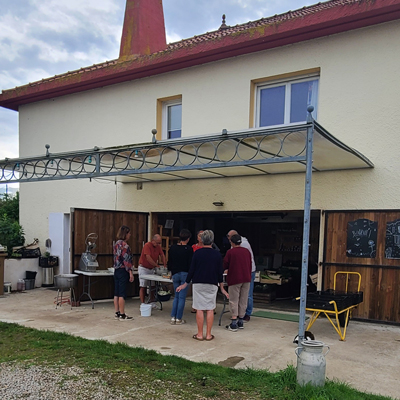
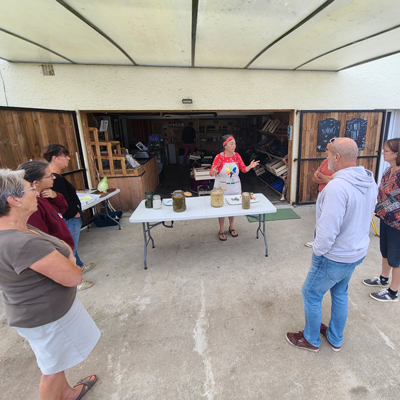
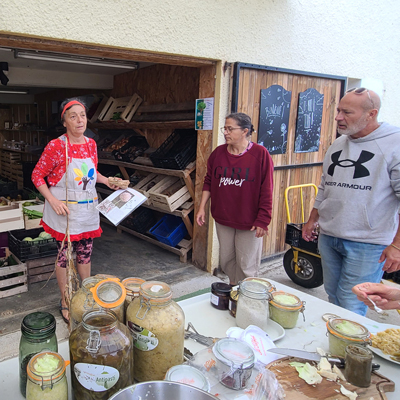
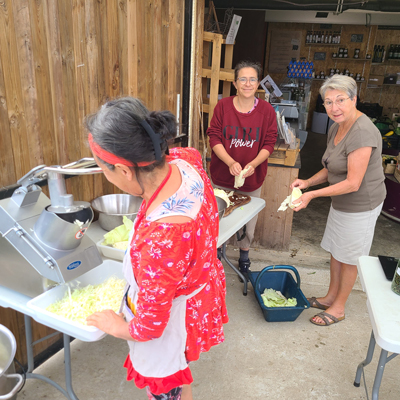
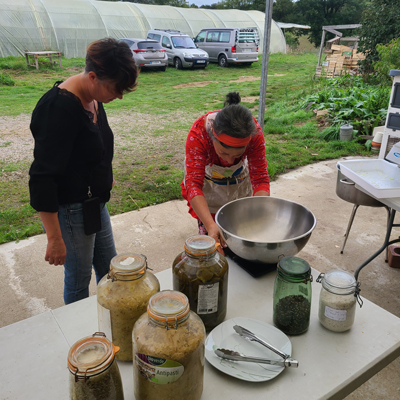
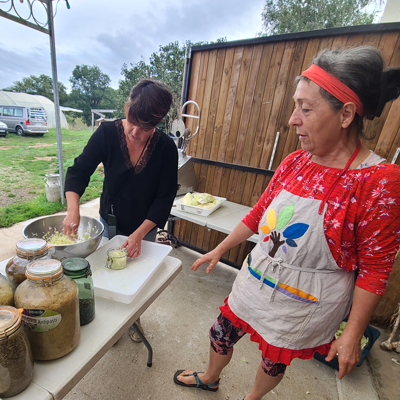
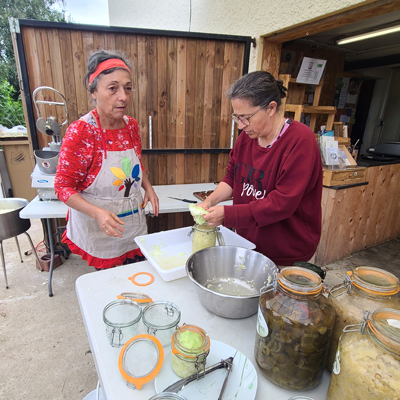
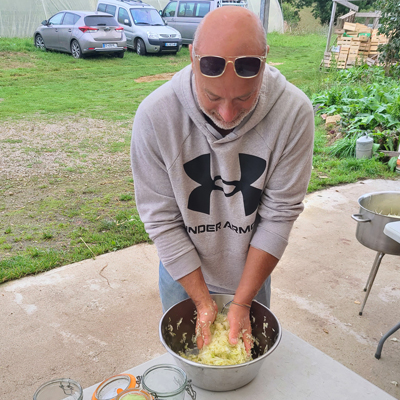
Corinne, a keen market gardener from "Les Jardins de Corinne" in Grosbreuil, gave us a warm welcome - a small gathering of 7 people from the Grosbreuil composting site - for a workshop on LACTOFERMENTATION.
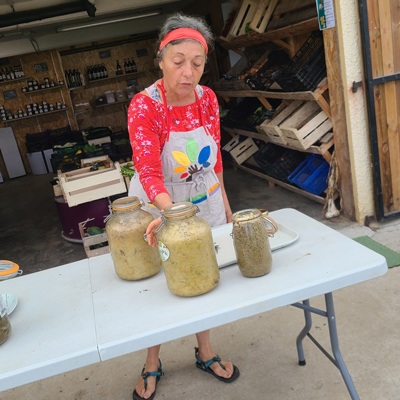
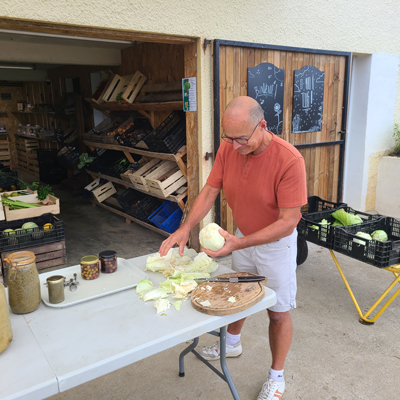
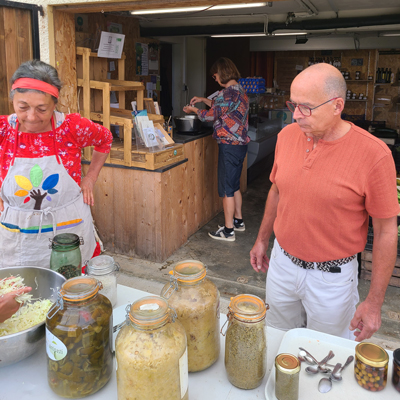
For the occasion, she had prepared several white cabbages to be cut into thin strips, as well as various home-made preparations for us to sample, such as garlic flowers, peppers and cabbages... All, of course, under the watchful eye of lactic bacteria, our new invisible best friends.
Lacto-fermentation is a bit like magic in the kitchen: vegetables are mixed with salt, and then the lactic acid bacteria get to work transforming the sugars into lactic acid.
This process creates an acidic environment that preserves our vegetables while repelling unwanted microbes.
From there, anything is possible: cabbages, carrots, beetroot, cucumbers and many other vegetables can go through this natural preservation "makeover".
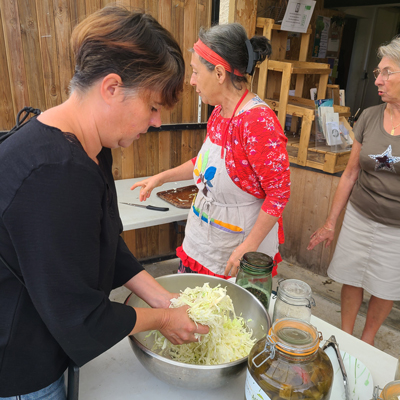
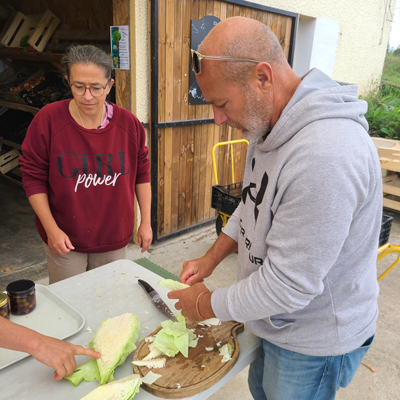
For the workshop, Corinne showed us how to prepare white cabbage for lacto-fermentation.
- It all starts with a fine, meticulous cutting session,
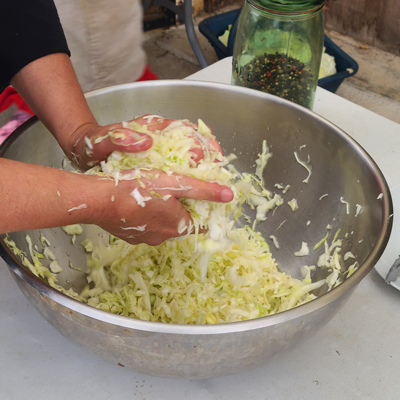
- Followed by mixing with 20 grams of salt per kilo of cabbage.
- Then it's off to the gym! We squeeze the cabbage into the jar with all the strength of our little arms, to expel the air and ensure that the lactic acid bacteria have free rein.
- And here's where it gets interesting: the jar needs to ferment quietly for 10 to 15 days.
- A little professional advice: place the jar in a tray to catch any water that might escape during fermentation... Yes, cabbage also has the right to a little freedom!
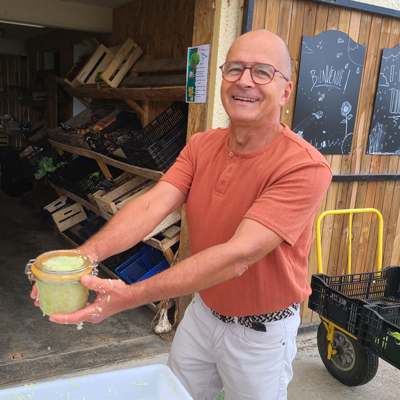
Our warmest thanks go to Corinne, our teacher and lacto-fermentation 'chef', for a workshop full of discoveries and good times. Some of us had no hesitation in plunging our hands into the cabbage with unsuspected enthusiasm! And for those of you who missed this memorable episode, don't worry:
Corinne invites all our members to repeat the experience on Saturday 21 at 2.30pm.
Come and knead, taste and laugh with us!